|
FOREVER FOSTERSKansas City Sheltie Rescue successfully re-homes hundreds of Shelties each year, but occasionally we encounter special cases that will need forever-care. These gentle souls suffer from circumstances beyond their control, and are unable to be placed with a new loving family. A variety of reasons can lead to this situation, including the need for long-term medical attention, being in the final stages of a serious illness, severe abuse or neglect, or just advanced old age. Senior dogs make great companions, but they can still be difficult to place.
MEET OUR FOREVER FOSTERS
The disease causes severe hyperkeratosis of the paw pads. They thicken, crack, and overgrow until they resemble little “baseball gloves.” Without careful management, this would make walking extremely painful and eventually impossible, and his skin could develop widespread lesions. To keep him comfortable and mobile, Max occasionally receives all-day IV amino-acid infusions from a specialized veterinary dermatologist, along with prescription topical and oral medications and a strict, high-protein diet (his favorite part is the raw egg yolk he gets morning and night!). Thanks to the dedicated support of KCSR, Max is thriving in palliative care. He cannot be adopted out due to the advanced nature of his condition, but he is living a full, joyful life. He loves car rides, wagon rides, having adventures riding in a shopping carts at dog-friendly stores, just anything that helps him feel the wind on his face. He loves it when on his outings, new friends give him ear-scratches (to Max, everyone is a friend.) Max is happiest when he’s with his foster family, always asking to be lifted onto the couch so he can be part of whatever is going on. Max is loving, grateful, patient, and a joy each day. KCSR is there to give him the comfort, dignity, and companionship every dog deserves for the rest of his life.
 It was late on a Saturday afternoon when we received an urgent message about a Sheltie at a shelter. The animal control officer found him as a stray in an area known for dog dumping, and the Sheltie was visibly terrified in the shelter.
We quickly went to the shelter early on a Sunday morning, picked up Caleb, and brought him into our program. It was evident that he had been a pet in a home before. It's heartbreaking to think why someone would abandon such a sweet boy. Then we found it - a concerning cyst on his abdomen. Subsequent tests and pathology reports revealed that Caleb has aggressive Mast Cell cancer. The decision of whether to proceed with surgery, potentially followed by chemotherapy, or to focus on keeping Caleb comfortable is a difficult one. Currently, we are providing medication to try and reduce the tumor size while consulting with the oncologist. Rescue can be very hard.
It was late on a Saturday afternoon when we received an urgent message about a Sheltie at a shelter. The animal control officer found him as a stray in an area known for dog dumping, and the Sheltie was visibly terrified in the shelter.
We quickly went to the shelter early on a Sunday morning, picked up Caleb, and brought him into our program. It was evident that he had been a pet in a home before. It's heartbreaking to think why someone would abandon such a sweet boy. Then we found it - a concerning cyst on his abdomen. Subsequent tests and pathology reports revealed that Caleb has aggressive Mast Cell cancer. The decision of whether to proceed with surgery, potentially followed by chemotherapy, or to focus on keeping Caleb comfortable is a difficult one. Currently, we are providing medication to try and reduce the tumor size while consulting with the oncologist. Rescue can be very hard.
 Lizzie was surrendered by her owner where she had been living outside in a dog run with little socialization.
Upon arriving at her foster home, Lizzie became very withdrawn, seeking comfort in her bed in the living room and rarely leaving it. Due to her fear of humans from past neglect, she would only go outside if the back door was propped open and her foster Mom was not nearby. Guiding her back inside often took up to 30 minutes, with the door propped open. Lizzie would only eat when alone at night.
Over time, she began to warm up to her foster Mom, especially when high-value treats were tossed to her.
After a few months, it was believed that Lizzie might be ready for adoption into a calm environment. However, she was returned less than a week later. This pattern repeated in a new home a few months later, where she was returned the next day.
Despite these challenges, Lizzie found comfort and security in her foster home, where she has been for seven years now, still needing to be put on lead when going outside.
Her favorite spot is behind her foster Mom's chair, where she spends most of her time. She responds when called, enjoys playing with other dogs, and occasionally greets visitors.
We will call her progress a success, although she has no intention of leaving her foster home. Lizzie was surrendered by her owner where she had been living outside in a dog run with little socialization.
Upon arriving at her foster home, Lizzie became very withdrawn, seeking comfort in her bed in the living room and rarely leaving it. Due to her fear of humans from past neglect, she would only go outside if the back door was propped open and her foster Mom was not nearby. Guiding her back inside often took up to 30 minutes, with the door propped open. Lizzie would only eat when alone at night.
Over time, she began to warm up to her foster Mom, especially when high-value treats were tossed to her.
After a few months, it was believed that Lizzie might be ready for adoption into a calm environment. However, she was returned less than a week later. This pattern repeated in a new home a few months later, where she was returned the next day.
Despite these challenges, Lizzie found comfort and security in her foster home, where she has been for seven years now, still needing to be put on lead when going outside.
Her favorite spot is behind her foster Mom's chair, where she spends most of her time. She responds when called, enjoys playing with other dogs, and occasionally greets visitors.
We will call her progress a success, although she has no intention of leaving her foster home.
|
Pet AdoptionsPetco 6801 W 75th Street Overland Park, KS 66204 2nd and 4th Saturday each month 11:00 am-1:00 pm
DonateFeatured SheltieConnect With Us
|



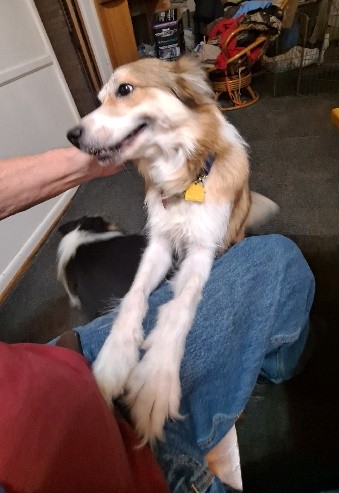
 Max is a treasured eight-year-young “forever foster” in the care of Kansas City Sheltie Rescue. He has a rare, terminal condition called hepatic hyperkeratosis (also known as hepatocutaneous syndrome). It develops when the liver can no longer properly produce or regulate amino acids. While this is truly a rare condition for any dog, when it appears, unfortunately Shelties are more predisposed to it than some other breeds. Many of us in the rescue who have worked with countless Shelties over decades have never seen this illness before. It took time and the diligent work of several vets, and ultimately a specialty veterinarian and specialized tests, to ultimately diagnose him.
 Jasper came from a hoarding situation we called the “Springfield 64” in 2015. Our rescue received 10 of these shelties. Jasper was adopted and came back last year as his owner was ill. He is still very shy in the house but loves to be outside. He still is uneasy around people. We were thinking he was around 4 when we got him. Due to his age and shyness he will stay with us as an forever foster.